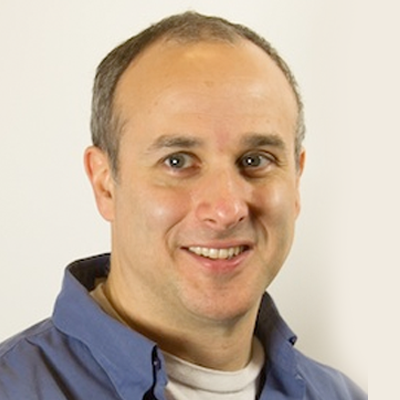








Eric Klopfer
Co-Director, Professional Development and Education Research ● Professor, Comparative Media Studies/Writing ● Director, Eduction Arcade ● Co-Director, J-WEL World Education Lab
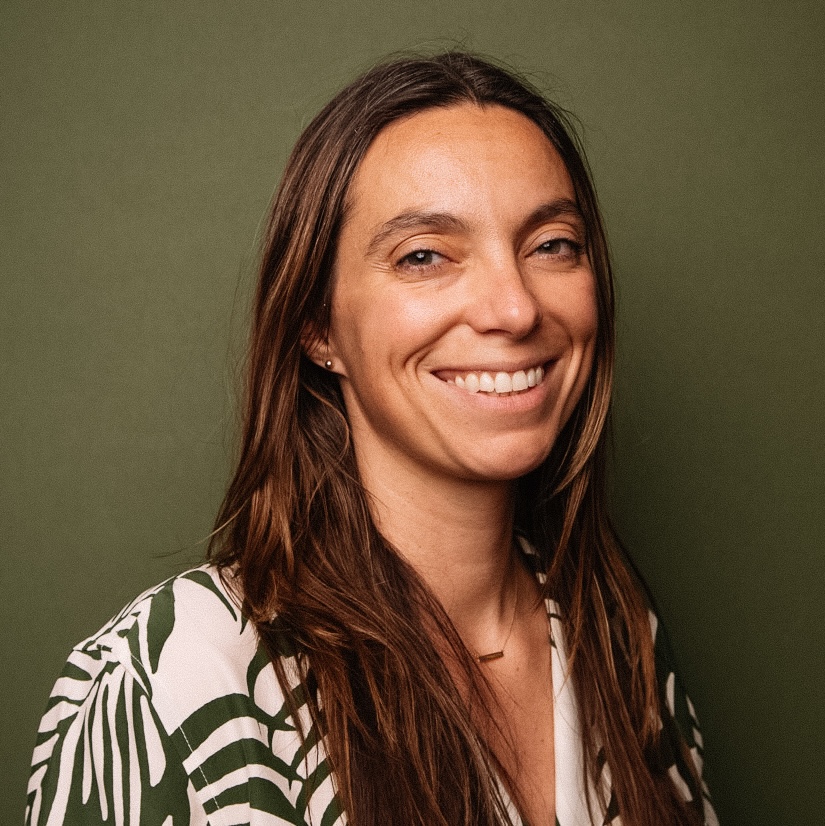
Cynthia Breazeal
Director, RAISE ● Professor, MIT Media Lab, Personal Robots Group ● Associate Director, MIT Media Lab
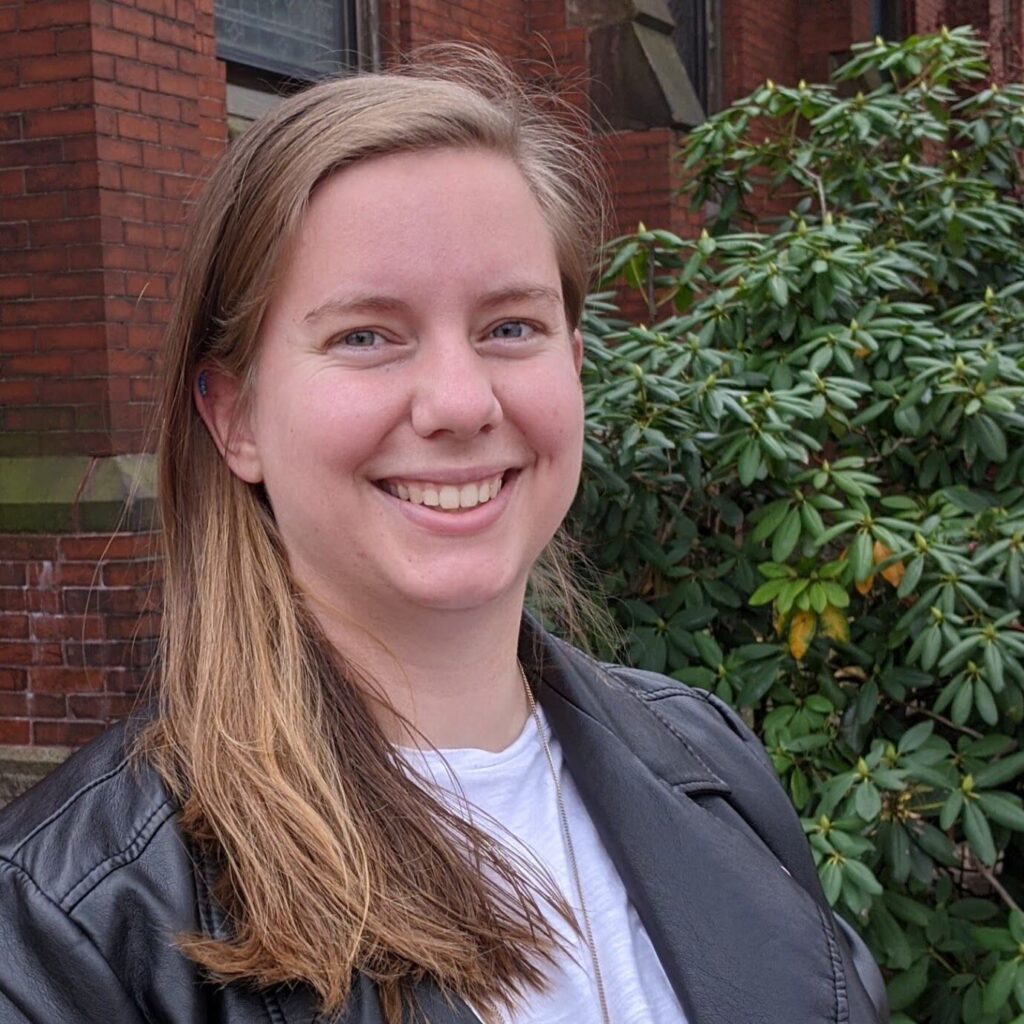
Hal Abelson
Co-Director, AI Literacy & Technologies ● Professor of Computer Science and Engineering, MIT CSAIL ● Founder, App Inventor
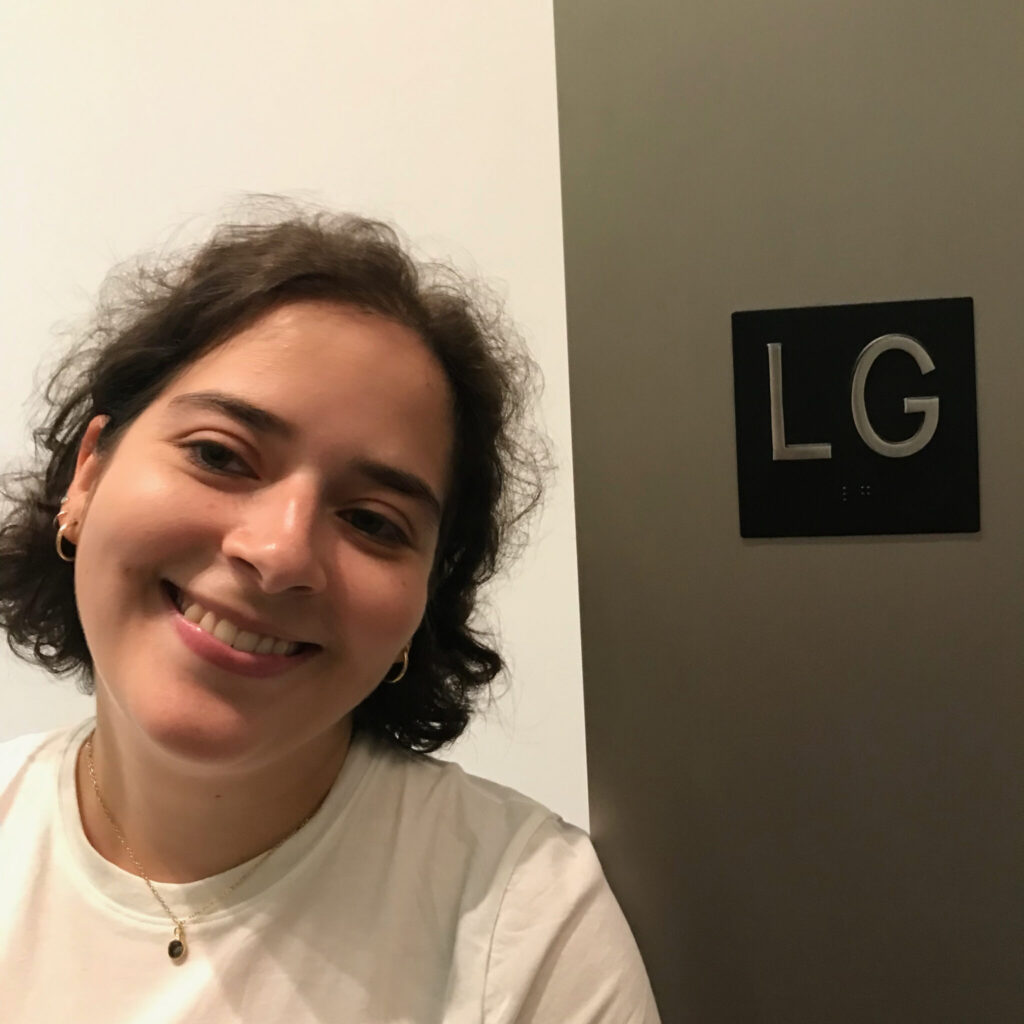
Mary Cate Gustafson-Quiett
Project Manager
Christina A. Bosch
Research Lead
Sarah Wharton
Curriculum Designer
Lydia Guterman
Teacher Development Specialist
John Masla
Assessment Specialist
Samar Abu Hegly
MEng Student
Glenda Stump
Researcher
Shinyi Kang
Research Assistant
Randi Williams
Graduate student, Personal Robots Group (PRG)
Daniella DiPaola
Graduate student, Personal Robots Group (PRG)
Safinah Ali
Graduate student, Personal Robots Group (PRG)
Sharifa Alghowinem
Research Scientist, MIT Media Lab
Matt Taylor
Consultant
Selim Tezel
App Inventor
Robert Parks
App Inventor
Raechel Walker
Graduate student, Personal Robots Group (PRG)
“Participating in the RAICA curriculum development is beneficial to me as I want to gain more experience while piloting the RAICA curriculum and share the knowledge that I have in order to extend the basic skills of AI to high school students.”
– David, teacher at Dzaleka Refugee Camp in Malawi
“I appreciate the hard work that went into creating this curriculum and look forward to going even deeper next year.”
– Josie, teacher at All Saints STEAM Academy in Middletown, RI
“Piloting the RAICA curriculum allows us to incorporate advanced technologies, diverse programming languages, and hands-on experiences with various platforms, thus equipping our students with a versatile skill set essential for navigating the rapidly evolving technological environment.”
– Hayley, teacher at Dubai Heights Academy in Dubai, UAE
“My focus for this project was the accessibility of the materials and the content to [my student] who is significantly visually impaired. I loved how [the RAICA team] supported me throughout the project. They were welcoming and engaged with all my questions and comments (at least a million of them!)”
– Dr. Muthrakumaren, teacher in Douglas County, CO
“I really enjoyed the experience and found the collaboration and willingness to make yourself available helped me succeed. Students learned so much in this very short amount of time.”
– Kelly, teacher at Hackley School in Tarrytown, NY
The RAICA curriculum is part of the MIT Responsible AI for Social Empowerment and Education (RAISE) Initiative, an MIT-wide initiative headquartered in the MIT Media Lab, in collaboration with the MIT Schwarzman College of Computing and MIT Open Learning. Check out the RAISE website (raise.mit.edu) to learn more and see the full offering of research and AI curricular materials for grades K-12.
RAICA is composed of project-based modules, each one focusing on a different area of AI (for example, image classification). Modules can be run in any order. Each module takes approximately 15 hours to complete, including whole class lessons and project build time.
Each RAICA module includes:
No! AI edtech tools use artificial intelligence to help students learn, while RAICA is a curriculum for students to learn about AI. However, RAICA modules do feature AI tools so students can create their own AI projects. RAICA works hard to make sure the AI tools prescribed in the curriculum are free and accessible to all of our users.
Not without your consent! RAICA is a research project and we work with select schools and extra curricular programs to test our materials. We only collect data from consented students (with the permission of their guardians) for the sake of research and curriculum design.
“Computational action, a new framing for computing education, proposes that while learning about computing, young people should also have opportunities to create with computing that have direct impact on their lives and their communities. In this Viewpoint, we outline two key dimensions of computational action—computational identity and digital empowerment—and further argue that by focusing on computational action in addition to computational thinking, we can make computing education more inclusive, motivating, and empowering for young learners. Learners have the capacity to develop computational products that can have authentic impact in their lives from the moment they begin learning to code, all they need is to be situated in contexts that allow them to do so.” (Tissenbaum et al., 2019) Click here to see the full article in Communications of the ACM.
For the purpose of our research, we think computational action looks like students making projects for a community or cause they care about.
To adapt the design thinking process for project-centered learning in a middle school AI literacy curriculum, RAICA applies the following model of Responsible Design as a pedagogical process:
1) Students’ projects center on one computational tool to ensure mastery of AI concepts. Instead of considering all possible tools to solve a problem, students brainstorm a project that can be addressed with the tool.
2) Project groups engage in ethical thinking to design with impact, stakeholders, and values in mind.
3) Students explore computational tools early in the process, leading to higher rates of engagement and better understanding of the tool and AI concept.
“Consider the analogy with learning a foreign language. Imagine someone who learned a few phrases so that they could read menus in restaurants and ask for directions on the street. Would you consider them fluent in the language? Certainly not. That type of phrase-book knowledge is equivalent to way most people use [AI] today. Is such knowledge useful? Yes. But it’s not fluency. To be truly fluent in a foreign language, you must be able to articulate a complex idea or tell an engaging story – that is, you must be able to “make things” with language. Similarly, [AI fluency involves] not only knowing how to use [AI] tools, but also knowing how to construct things of significance with those tools.” – Adapted from Mitchel Resnick.
Most simply put, constructionism is the pedagogical belief that students learn best by using tools and materials to construct their understanding of the world. It is well aligned with other pedagogical models such as project-based learning and student-centered learning. “The word constructionism is a mnemonic for two aspects of the theory of science education underlying this project. From constructivist theories of psychology we take a view of learning as a reconstruction rather than as a transmission of knowledge. Then we extend the idea of manipulative materials to the idea that learning is most effective when part of an activity the learner experiences as constructing a meaningful product.”
(Sabelli, N. (2008). Constructionism: A New Opportunity for Elementary Science Education. DRL Division of Research on Learning in Formal and Informal Settings. pp. 193–206. Retrieved September 20, 2017.)
TPACK stands for Technological Pedagogical Content Knowledge. It is a framework that supports teachers technological knowledge, pedagogical knowledge, and content knowledge for successful integration of technology into teaching. More information can be found at tpack.org.
UDL stands for Universal Design for Learning. It is a framework designed to optimize learning for everyone, based on neuroscience and how people learn. UDL promotes learner agency that is purposeful, reflective, resourceful, authentic, strategic, and action-oriented. More information can be found here.
Each RAICA module goes through the same four design steps:
There are opportunities for students and teachers to work with us each step of the way as co-designers (ideate and prototype), beta testers, or as pilot sites. Once a module has been publicly released that means it is freely available to any teacher anywhere in the world to use under the creative commons license. Check out each module’s page for more details on where it’s at in the design process and how you can get involved.
We like to work with students and teachers as early as possible in the design process. Co-design has taken many different shapes as we’ve worked with different students and teachers across the world, but it always starts during the ideation and prototyping phase of design. We prototype lessons and structure the curriculum based on ideas generated by co-designers. If there is an opportunity to co-design a module, you will find details on that module’s page.
Beta testing is the first round of testing a RAICA module. During this phase of testing, we work closely with selected teachers to gather data on how our materials are (or aren’t) being used and how students are understanding the information. You must apply to beta test with RAICA. If a module is ready to be beta tested, you can find that information on the module’s page.
Piloting is an opportunity to test and provide feedback on the RAICA curriculum at scale, like across a district or at multiple sites for an after school program. You must apply to be a pilot site. Piloting is part of RAICA research and requires a consent process for data collection. If a module is ready to be piloted, you can find that information on the module’s page.